
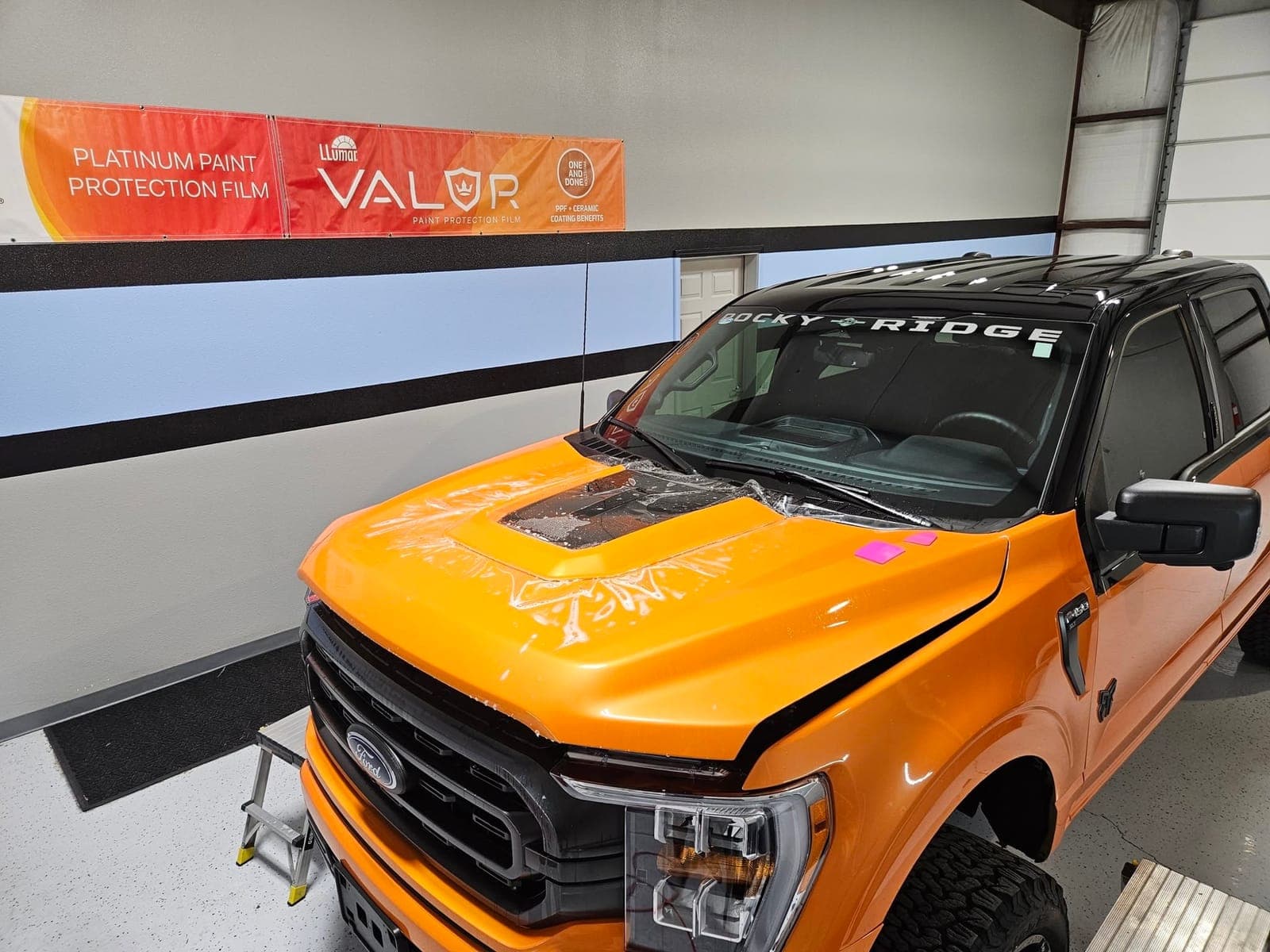
PPF vs. Ceramic Coating: Which One Do You Need — or Both?
September 16, 2026 · 6 min read
- ▸PPF is a thick, clear urethane film that physically absorbs rock chips, scratches and road debris.
- ▸Ceramic coating is a thin chemical layer for gloss, UV protection and easy washing — it does not stop rock chips. FEYNLAB, the coating we install, says so directly.
- ▸They solve different problems, so it’s rarely one or the other.
- ▸The most common setup: PPF on the high-impact front end, ceramic coating over the whole vehicle — including the film.
- ▸Order matters. Film goes on first; coating before film can keep the film from sticking.
The short answer
If your worry is rock chips from highway driving, you want paint protection film. If your goal is gloss, easy washing and protection from sun and contaminants, you want a ceramic coating. If you want both — and most people with a new or high-value truck do — you put film on the front and coat everything.
| Paint protection film | Ceramic coating | |
|---|---|---|
| Stops rock chips | Yes — that’s its job | No |
| Light scratches | Most self-heal with heat | Resists light marring only |
| What it is | Thick clear urethane film | Thin bonded layer (1–2 microns) |
| Gloss & water beading | Clear finish | Deep gloss, strong beading |
| UV & chemical resistance | Yes | Yes |
| Typical coverage | High-impact panels, or full vehicle | Whole vehicle |
| Our warranty | 10 years (LLumar) | 1, 3 or 5 years (FEYNLAB) |
What paint protection film actually does
PPF is a clear urethane film installed over the paint. Because it has real thickness, it takes the hit from rocks, sand and road debris instead of your clear coat — which is why it’s often called a clear bra.
Quality film also self-heals. LLumar notes that “the majority of surface scratches will self-heal when exposed to a heat source, such as the sun, warm water, heated body panel.” Light swirls and marks fade on a hot Texas afternoon. A deep gouge won’t, but the film took it instead of your paint.
What ceramic coating actually does
A ceramic coating bonds a hard, slick layer to the paint. It adds depth and gloss, makes water bead and sheet off, resists bug etching, bird droppings and hard water, and protects against UV fading and oxidation. Washing gets dramatically easier.
What it can’t do is stop physical damage. FEYNLAB is blunt about its own product: a coating “does NOT prevent rock chips or deep scratches,” and “keys and shopping carts can still scratch through it.” At one to two microns thick, there’s simply nothing there to absorb an impact.
Coating protects the finish. Film protects the paint. They’re not the same job.
Why most people end up with both
Rock chips land almost entirely on the front of a vehicle — the bumper, hood, fenders and mirrors. So the efficient move is to film those panels and coat the whole vehicle, including over the film.
That’s exactly the setup FEYNLAB recommends: PPF on high-impact areas and ceramic coating over the entire vehicle, for “combined physical and chemical protection.” The coating makes the film easier to clean and adds gloss, and the whole vehicle gets the same easy-wash finish.
Order matters: film first, then coat
If you’re doing both, the film has to go on first. LLumar says it’s not recommended to apply wax or any other coating before installing its film, because “waxes and coatings can interfere with the film’s adhesion to the painted surface.”
So the sequence is: correct the paint, install the film, then coat over everything. If your vehicle is already coated and you want film added later, tell us — the coating has to be dealt with on the panels getting film.
Which one fits you
- ·Mostly highway miles, a new or high-value vehicle, or you hate seeing chips on the hood → PPF on the front end, at minimum.
- ·You want the paint glossy, easier to wash and protected from sun and contaminants, and chips aren’t a big concern → ceramic coating.
- ·You want the front end chip-free and the whole vehicle easy to keep clean → PPF up front plus a full ceramic coating. This is the most common package we do.
- ·Full-vehicle film is the top tier — every painted panel protected — for show vehicles or owners who want zero compromise.
Caring for film and coating
Both reward the same habit: gentle hand washing. LLumar recommends hand-washing film with soap, water and a soft cloth, and discourages pressure washing and automatic car washes. A coated vehicle needs nothing more than regular maintenance washes — no wax, ever.
Common questions.
Is PPF better than ceramic coating?
Neither is better — they do different jobs. PPF physically stops rock chips and scratches; ceramic coating adds gloss, UV protection and easy washing but won’t stop chips. If rock chips are your concern, PPF is the answer.
Does ceramic coating protect against rock chips?
No. FEYNLAB, which makes the coatings we install, states that a coating does not prevent rock chips or deep scratches. It’s a very thin layer with nothing to absorb an impact — that’s what paint protection film is for.
Can you put ceramic coating over PPF?
Yes, and it’s the most common way to do both. FEYNLAB recommends film on high-impact areas and coating over the entire vehicle, including the film. Just install the film first — LLumar notes that coatings applied before film can interfere with the film’s adhesion.
Do I need PPF on the whole vehicle?
Most people don’t. Rock chips hit the front end, so partial-front or full-front coverage — hood, fenders, bumper and mirrors — protects where the damage actually happens. Full-vehicle film is for owners who want every painted panel covered.
How long do PPF and ceramic coating last?
The LLumar film we install carries a 10-year manufacturer warranty. Our FEYNLAB ceramic coatings come in 1-, 3- and 5-year packages. Both last longer with gentle hand washing.
Can I take a vehicle with PPF through an automatic car wash?
It’s best not to. LLumar discourages automatic car washes and pressure washing on its film. Hand washing keeps both film and coating looking their best.
Book the work.
Paint Protection Film
Self-healing LLumar film — partial front, full front or full vehicle — with a 10-year warranty.
Explore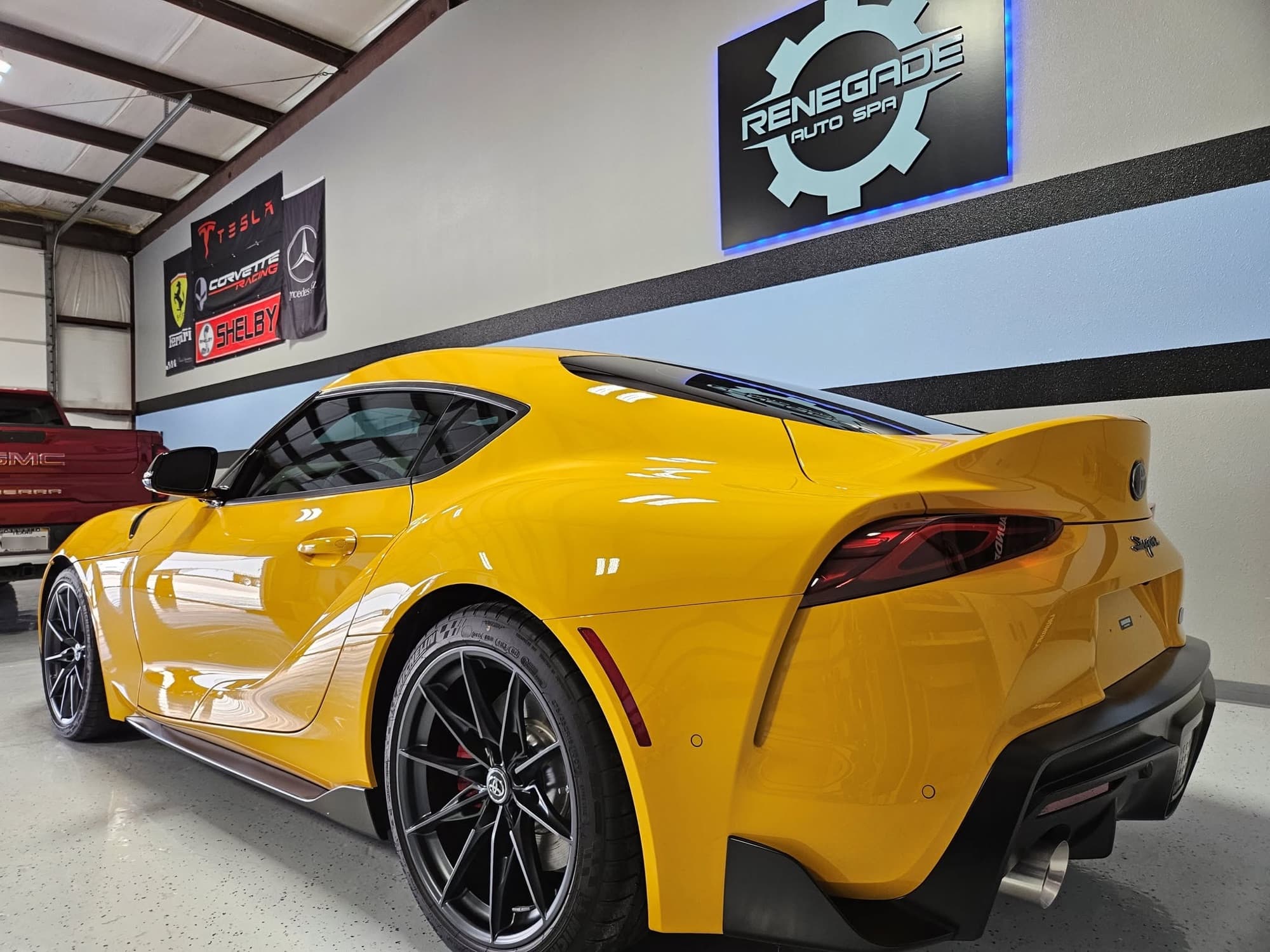
Ceramic Coating
FEYNLAB coatings in 1, 3 and 5-year packages, correction included.
ExploreCeramic Coating Cost
What drives the price of a ceramic coating — and why quotes vary so much.
ExploreFilm, coating or both?
Tell us the vehicle and how you drive it — we’ll recommend the right coverage and quote PPF, ceramic or both.