
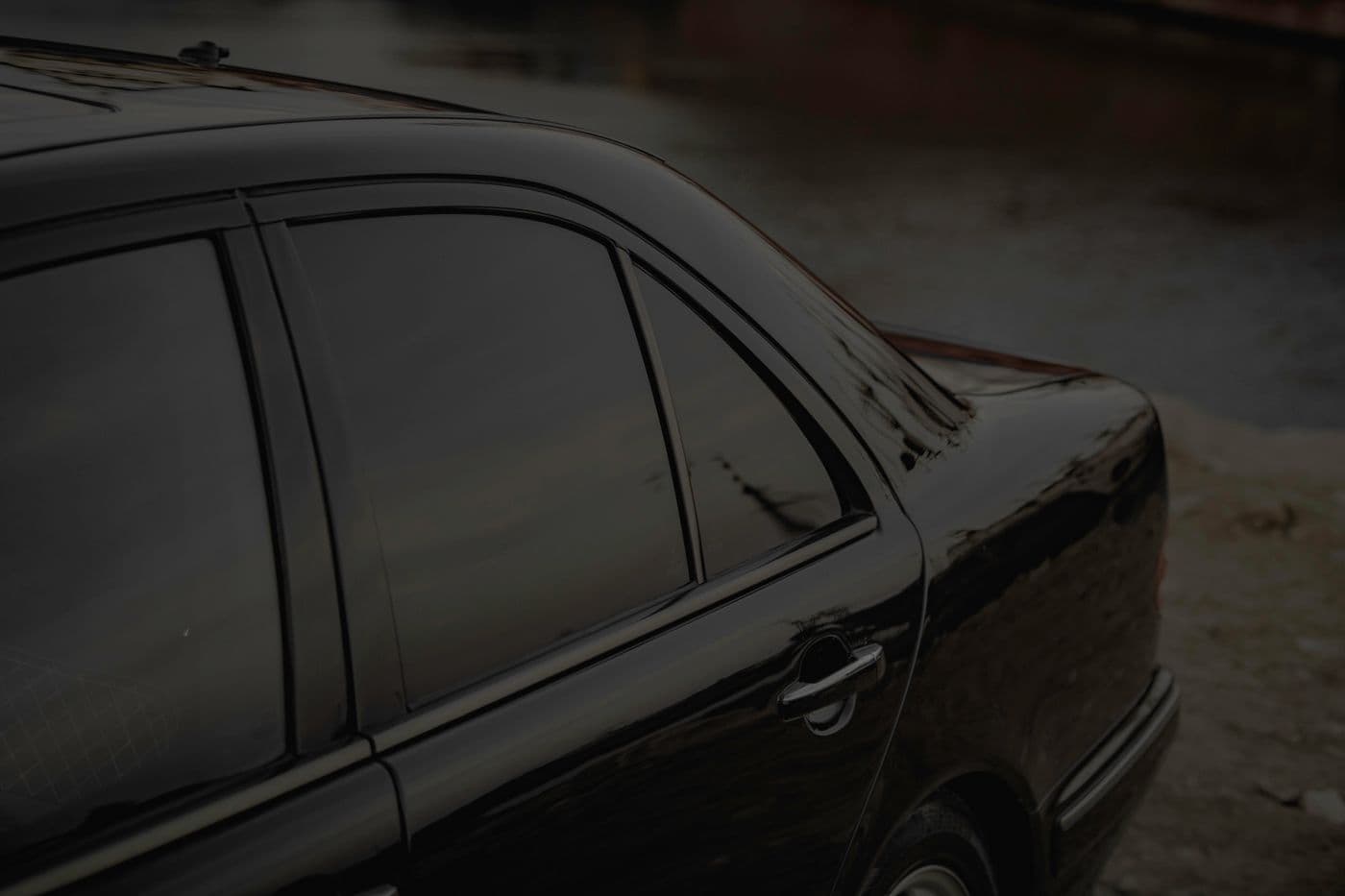
Texas Window Tint Laws: What’s Actually Legal in 2026
September 15, 2026 · 7 min read
- ▸Front side windows must let through 25% or more light (25% VLT) and reflect 25% or less.
- ▸Back side windows and the rear window can be as dark as you want, as long as the truck has both outside mirrors.
- ▸The windshield can only be tinted above the AS-1 line — or the top 5 inches if there’s no AS-1 mark.
- ▸No red, amber or blue tint. A compliance sticker goes in the bottom rear corner of the driver’s window.
- ▸Texas dropped annual safety inspections for regular vehicles in 2025, so nobody checks your tint at inspection anymore — but the law still applies on the road.
The short answer
Texas measures tint by how much light gets through the glass — VLT, or visible light transmission. A higher number is lighter. 25% VLT means a quarter of the light comes through, so it looks fairly dark but you can still see a person through it.
The rule people care about: on the two windows beside the driver, the film and the factory glass together have to let through at least 25% of the light. Go darker than that and the tint is illegal, no matter what the shop tells you.
| Window | What Texas allows |
|---|---|
| Front side windows (driver + passenger) | 25% VLT or more · 25% reflectance or less |
| Back side windows (behind the driver) | Any darkness |
| Rear window | Any darkness if the vehicle has outside mirrors on both sides |
| Windshield | Tint only above the AS-1 line, or the top 5 inches if there’s no AS-1 line |
| Colors | No red, amber or blue |
Front side windows: the 25% rule
The windows to your immediate left and right have to measure 25% VLT or higher once the film is on. That measurement includes the glass itself, which already blocks some light — usually landing factory glass somewhere around 70–80% before any film goes on. That’s why a film sold as “35%” doesn’t come out at 35% on the meter.
Texas also caps how mirrored the film can be: luminous reflectance has to be 25% or less. That rules out the heavily mirrored, chrome-looking films.
Any shop can install 5% “limo” on your front windows. It’s still illegal, and you’re the one who gets the ticket.
Back side windows and the rear glass
Behind the driver, Texas stops caring about darkness. Back side windows can be as dark as you like. The rear window can be too, as long as the vehicle has working outside mirrors on both sides — which every modern truck does.
That’s why so many trucks around Rockwall run legal-limit film up front and much darker glass in back. You get privacy over the back seat and the bed without risking a citation on the driver’s window.
The windshield rule most people get wrong
You cannot tint the full windshield in Texas. Film is allowed only above the AS-1 line — the small marking etched near the top of most windshields. If your windshield has no AS-1 mark, the limit is the top five inches.
That top strip is genuinely useful in Texas: it cuts the low sun without touching your view of the road. Below that line, the windshield has to stay clear.
The sticker that’s supposed to be on your window
Texas requires a compliance label on tinted vehicles. It goes between the film and the glass at the rearmost bottom corner of the driver’s window, and it states that the film complies with Chapter 547 of the Transportation Code.
It’s small and easy to miss, but it’s the quickest proof that the work was done by a shop that tints to spec. Any reputable installer applies it without being asked.
Medical exemptions
If sunlight is a genuine medical problem for you, Texas allows darker film with a signed statement from a licensed physician or optometrist saying the tint is necessary to protect the health of the driver or an occupant. DPS no longer issues a certificate for this — the signed statement is the proof, and you keep it in the vehicle.
One thing worth knowing: DPS’s own guidance says an exemption doesn’t put you above the law. Whether a vehicle is in violation is still left to law enforcement and the courts, so you may still have to explain yourself at a stop.
What changed in 2025: no more safety inspection
This is the part most tint articles still get wrong. Texas abolished the annual safety inspection for non-commercial vehicles on January 1, 2025. Instead of an inspection, you pay a $7.50 inspection program replacement fee when you register. Commercial vehicles still get inspected.
So the yearly tint meter check is gone for regular trucks and cars. What didn’t change is the law itself: 25% on the front sides is still the standard, and an officer can still measure your windows at a traffic stop and write a citation.
Rockwall County is one of the emissions-testing counties, along with Dallas, Collin, Denton, Kaufman, Ellis and the rest of the DFW group. So you’ll still take your vehicle in for an emissions test — that test doesn’t look at tint.
No inspection doesn’t mean no rule. It just means nobody catches illegal tint until you’re pulled over.
How we handle it at Renegade
We tint to a legal, spec-compliant level by default and talk through the options before anything goes on the glass. If you want the back much darker than the front, that’s a normal build and completely legal.
We’re a certified LLumar installer, so the film is carbon or ceramic that holds its color instead of the cheap dyed film that turns purple. Ceramic is what most Texas trucks should be running anyway — it rejects infrared heat, which is what actually makes a cab miserable in August.
Common questions.
What’s the darkest legal tint in Texas?
On the front side windows, 25% VLT — the film and glass together must let through at least 25% of the light. Behind the driver there’s no darkness limit, so back side windows and the rear glass can go as dark as you want on a vehicle with both outside mirrors.
Is 20% or 5% tint legal in Texas?
Not on the front side windows — both are below the 25% minimum. They’re legal on the back side windows and rear glass. A lot of trucks run 5% “limo” in back and legal film up front.
Can I tint my whole windshield?
No. Windshield film is allowed only above the AS-1 line, or the top five inches if the windshield has no AS-1 marking. The rest of the windshield has to stay clear.
Does anyone still check tint now that safety inspections ended?
Not at inspection — Texas dropped annual safety inspections for non-commercial vehicles in January 2025, and the emissions test in counties like Rockwall doesn’t measure tint. Law enforcement can still measure your windows at a traffic stop, so the limits still matter.
Does a medical exemption let me run any tint I want?
It allows darker film on the front side windows and the top of the windshield with a signed statement from a licensed physician or optometrist, kept in the vehicle. DPS notes it isn’t a blanket shield — whether a vehicle is in violation is still up to law enforcement and the courts.
Will dark tint hurt my cell or GPS signal?
Not with ceramic film. Ceramic is non-metallic, so it blocks heat without interfering with cell, GPS, radio or keyless entry. Older metallic films are the ones that caused that problem.
This article is general information, not legal advice. Tint rules change and enforcement is up to law enforcement and the courts — check the current Texas DPS standards linked below, or ask us and we’ll walk you through it.
SourcesBook the work.
Window Tint
Carbon and ceramic film installed to spec in Rockwall — legal up front, as dark as you want in back.
Explore
Ceramic Coating
FEYNLAB ceramic that keeps the paint glossy and easy to wash for years.
Explore
Paint Protection Film
Self-healing LLumar film that takes the rock chips so your paint doesn’t.
ExploreTint it right the first time.
Tell us your vehicle and how dark you want to go — we’ll quote film that’s legal where it has to be.